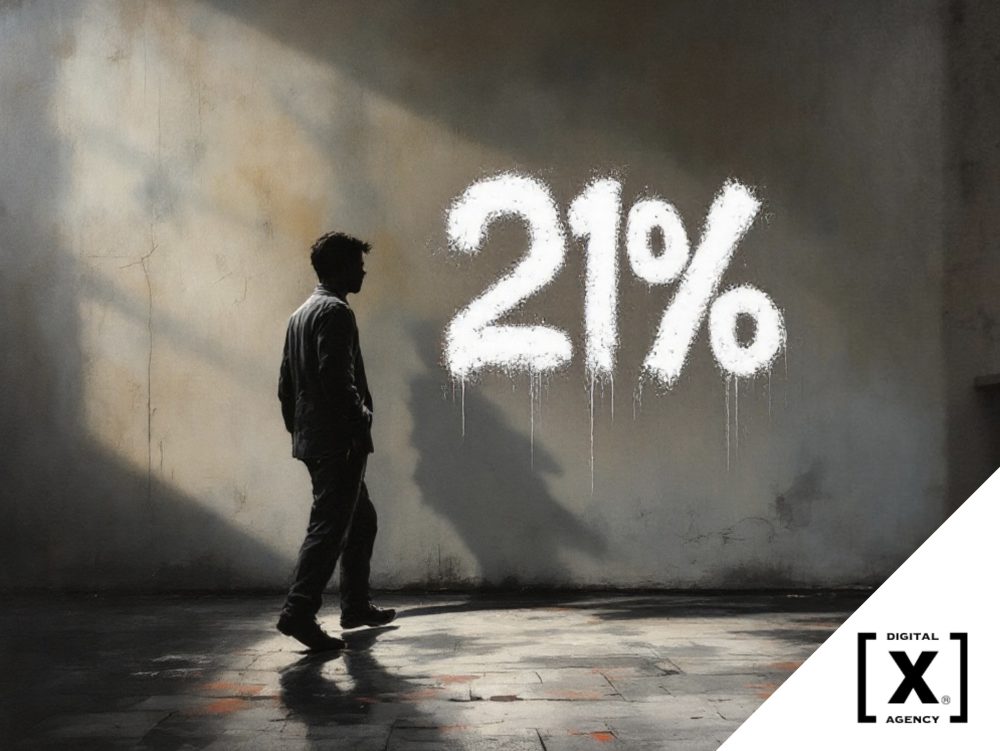


The AI marketing skills gap in Southeast Asia just got a number attached to it. According to the State of AI in Marketing SEA 2026 — a joint study by MMA APAC and Decision Lab surveying 143 senior marketers across Indonesia, Vietnam, the Philippines, Thailand, and Singapore — 78% of SEA marketers name skills and training as their single biggest barrier to AI adoption. That is not a minor friction point. However, a closer look at the research reveals something even more striking: the gap is widening, not closing. The organisations that have already solved the skills problem are pulling away from everyone else.
This article breaks down what the data actually says, why the standard advice — “just train your team” — falls short, and what the top 21% of SEA marketing organisations are doing differently.
What the MMA APAC Report Actually Found
The State of AI in Marketing SEA 2026 report, released on 6 August 2026, classifies organisations into four AI maturity stages: Awareness, Exploration, Early Adoption, and Expansion. By 2026, only 4% of surveyed organisations remain at the Awareness stage. That sounds encouraging. However, moving from awareness to actual scaled use is where most organisations are stalling.
The report segments the market into two groups for its core analysis: Advanced adopters (organisations at Stage 3 Early Adoption and Stage 4 Expansion) and Early adopters (organisations still in the earlier stages). Advanced adopters now account for 57% of the market. This means that while almost everyone has started the AI journey, roughly 43% of organisations are still in stages where AI use is patchy, experimental, or siloed to one or two use cases.
The 78% skills barrier figure cuts across both groups. In other words, even many Advanced adopters still feel the capability pinch. The difference is what they are doing about it. The remaining 22% — the organisations that have genuinely solved the AI marketing skills gap — have built systems that make the barrier irrelevant for their teams.
Why “Just Train Your Team” Is the Wrong Frame
The instinctive response to a skills gap is a training programme. That is not wrong, but it misses the deeper point. Training alone does not produce an AI-capable marketing organisation. Furthermore, training takes time — and the competitive gap does not pause while you run workshops.
The report is explicit here. Among Advanced adopters, 63% already run structured AI training programmes for their marketing teams. Among Early adopters, only 36% do. That 27-percentage-point gap in training investment is one clear reason the capability distance between the two groups keeps widening.
However, training is a lagging indicator, not a leading one. Advanced adopters did not reach Stage 3 or 4 because they trained better. They scaled AI across more functions, built operational habits around it, and learned by doing — not by attending sessions. As Thue Quist Thomasen, CEO of Decision Lab, puts it: “The direction is consistent: integrate AI more deeply than rivals, build proficiency through firsthand practice, and keep your judgement sharp enough to know when to trust the output and when not to.”
Consequently, the AI marketing skills gap is fundamentally a doing problem, not a knowing problem.
Closing the AI Marketing Skills Gap: What Advanced Adopters Do Differently
The report identifies three clear patterns that separate Advanced adopters from the rest. Each one matters for any marketing team — or business — trying to close the gap quickly.
1. They scale AI across multiple functions simultaneously
This is the most important finding in the entire report. Advanced adopters do not focus AI investment on one function and move on. Instead, they run AI at scale across content and creatives, customer insights, media allocation, and measurement — all at the same time.
The numbers are striking. In content and creative production, 54% of Advanced organisations have reached scaled AI use. Among Early adopters, that figure is 25%. In customer insights and analytics, Advanced adopters reach 41% versus 21% for Early adopters. The widest relative gap appears in media allocation: 33% of Advanced organisations apply AI there, against only 10% of Early adopters.
As Rohit Dadwal, CEO of MMA Global Asia Pacific, comments: “Their advantage comes less from owning more tools than from scaled application across use cases, functions, and decision points. They are turning disciplined micro-actions into macro-impact.”
For your marketing team, this is a practical checklist. If AI use is concentrated in one area — say, content generation only — you are likely sitting in the Early adopter segment, regardless of how many AI tools you subscribe to.
2. They invest in governance, not just capability
The report reveals an important nuance: awareness of AI risk is not the same as being ready to manage it. Data privacy is the top concern across the whole survey, cited by 62% of respondents. Advanced adopters are more ethically aware — 83% recognise the ethical implications of AI versus 62% of Early adopters.
However, formal AI risk strategies are rare across the board. Only 44% of Advanced organisations have one. Among Early adopters, the figure drops to 21%.
This means even the leaders have governance work ahead of them. That said, having a documented risk framework puts Advanced organisations in a stronger position with clients, regulators, and internal stakeholders. For Malaysian and Singaporean businesses navigating PDPA requirements and a tightening data governance environment, this is not a theoretical concern. It is a near-term business requirement.
3. They treat AI as a budget priority, not an experiment
Money follows confidence. Among Advanced adopters, 42% plan to increase their marketing budgets in 2026, with 18% expecting a significant rise. Among Early adopters, only 29% plan any increase. Meanwhile, 34% of Early adopters plan to hold budgets flat — compared with just 26% of Advanced organisations.
This budget divergence creates a compounding effect. Advanced adopters reinvest more, scale faster, and widen the gap further. By the time Early-stage organisations decide to invest seriously, the distance is much harder to close.
What This Means for Businesses in Malaysia and Singapore
The five markets surveyed — Indonesia, Vietnam, the Philippines, Thailand, and Singapore — do not map neatly onto the Malaysia context. Xwork operates in the Johor Bahru–Singapore corridor, a business environment where SMEs compete for the same customers, talent, and digital attention as Singapore’s considerably larger agencies and enterprises.
For businesses in this corridor, the stakes of the AI marketing skills gap are particularly acute. Singapore-based competitors are already at or near Advanced adopter status in many categories. Malaysian SMEs that rely on a single AI tool for content generation — or that have not yet integrated AI into their SEO and organic search strategy — are simply not competing on the same terms.
Moreover, the report’s finding that media allocation is where the performance gap is widest is directly relevant here. AI-assisted media allocation — knowing which paid advertising channels and audiences to prioritise based on real-time data — is now a standard capability among Advanced adopters in Singapore. For JB-based businesses targeting the same regional customers, this is a capability gap worth taking seriously right now.
In addition, the rise of AI-powered customer engagement tools — including AI chatbots and marketing automation for WhatsApp and conversational channels — means the skills gap extends beyond the marketing team. It reaches into sales and customer service as well.
Why the Standard Responses Fall Short
Three common responses to the AI marketing skills gap are worth examining critically, because each one carries a hidden limitation.
Hiring an AI specialist. This makes sense for large organisations. For most Malaysian and Singaporean SMEs, however, a dedicated AI marketing specialist is not a realistic hire. The budget does not exist, and the talent pool is thin. Furthermore, one specialist cannot embed AI across every marketing function simultaneously — which, as the report shows, is exactly what the top performers are doing.
Waiting for better tools. This is the most common trap. The reasoning goes: once the tools are easier to use, the skills gap will solve itself. However, the MMA APAC data does not support this view. The gap between Advanced and Early adopters is not about tool access. Almost everyone has access to the same AI platforms. The gap is about operational depth and the discipline to scale across functions — not tool availability.
Running a training workshop. As noted earlier, training is a lagging indicator. It helps, but it does not substitute for the operational structures and execution habits that Advanced adopters have already built over months of practice.
The Case for AI Execution Infrastructure
The report’s conclusion points in one clear direction. The organisations pulling ahead are those that have built AI execution infrastructure across their full marketing stack — not just picked up isolated tools or attended training sessions. For SMEs in Malaysia and Singapore that cannot afford to build this infrastructure in-house, the practical path is working with a partner that has already built it.
This is the gap the CODE/RAVEN framework from Xwork addresses directly. Rather than selling access to tools or running training sessions, it deploys integrated AI execution across content marketing and SEO, paid media, social, lead conversion, and creative production — the exact function set where the MMA APAC report shows the widest capability divergence between leaders and laggards.
In other words, when your team lacks the AI depth to compete across functions, the answer is not to train into it over the next twelve months. The answer is to access execution infrastructure that is already running at the Advanced adopter level and apply it to your campaigns immediately.
The 78% of SEA marketers who named skills as their biggest barrier are not wrong about the problem. They are simply solving it in the wrong place. The top 21% did not close the AI marketing skills gap by training harder. They built systems that made the gap operationally irrelevant.
Three Steps You Can Take This Week
If the MMA APAC data describes your organisation — aware of AI, experimenting in one or two areas, but not yet scaling across functions — here are three practical steps to move forward immediately.
Step 1: Audit your current AI use by function. List every marketing function your team touches: content creation, SEO, paid media, social media, email, and analytics. For each one, ask honestly: are you actively using AI here, or just planning to? If the answer is “planning to” for more than three functions, you are in Early adopter territory regardless of the tools you have purchased.
Step 2: Identify your highest-leverage function first. The MMA APAC data shows that media allocation and measurement are where AI converts into commercial decisions. For most SMEs in the JB-SG corridor, this means your paid ads targeting and attribution data are the highest-priority area to integrate AI into first. Start there before expanding to other functions.
Step 3: Stop treating AI as a one-team project. The report is consistent on this point: organisations that scale AI across the most functions simultaneously are the ones widening the competitive lead fastest. That means AI integration cannot be the marketing manager’s side project. It needs to be an operational priority — with budget, ownership, and a delivery timeline.
The AI marketing skills gap in Southeast Asia is real, measurable, and widening. However, it is not an inevitable condition. The path forward is clear, and the organisations that take it in 2026 will be the ones that are hardest to catch in 2027.
Xwork helps Malaysian and Singaporean businesses close the AI execution gap through the CODE/RAVEN marketing protocols — integrated AI execution across every marketing function, without the cost of building an in-house AI team. Book a discovery call to see where your business sits on the AI maturity curve.
