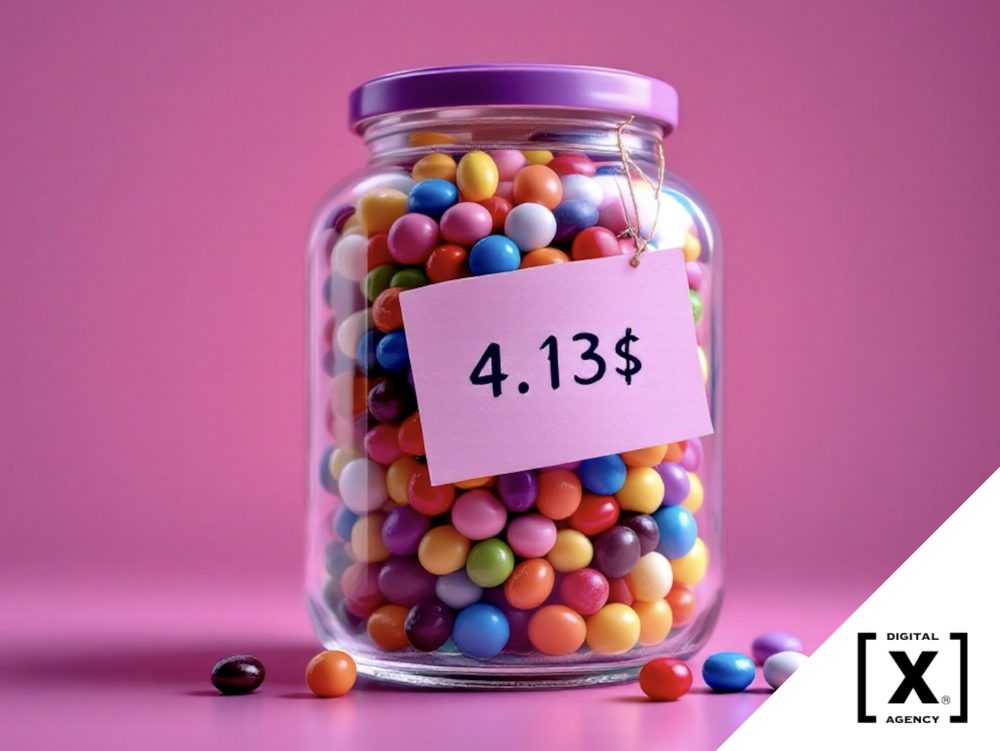


Meta’s $4.13 Per Dollar ROAS Proves It: Click-to-WhatsApp Is Your Highest-Converting Channel in 2026
At Cannes Lions on June 23, 2026, Meta presented a data point from an analysis of more than one million ad campaigns: every dollar spent on Meta advertising generates an average of $4.13 in downstream revenue. That is a 25% improvement from the same figure in 2022. The methodology, developed by researchers at the University of California at Berkeley and published with the National Bureau of Economic Research, uses randomised controlled experiments to measure incremental sales lift — a materially more rigorous approach than last-click attribution.
Within that headline figure, Meta highlighted one channel as the highest-converting path: click-to-WhatsApp ads, which generate 40% higher conversions than landing pages in A/B tests. Singapore was specifically named as a target market. For Malaysian and Singaporean businesses running Meta ads, those two data points belong together in every campaign brief.
However, there is a catch. Capturing that 40% conversion premium requires what Meta’s own platform policy now mandates: a purpose-built WhatsApp automation — not a generic AI concierge, not a keyword reply menu, and not a human answering manually at 11pm. The click-to-WhatsApp ads data and the WhatsApp Business Platform policy update are two pieces of the same story.
What the $4.13 Number Actually Means
Meta’s ROAS figure needs context before it becomes useful. It is not a guarantee. It is an average across more than one million campaigns spanning every industry, budget level, objective type, and advertiser sophistication. A campaign that returned $40 per dollar and one that returned $0.40 per dollar both contribute to that average.
What the figure does tell you is directional: Meta’s AI-powered ad delivery improvements — specifically its ranking, delivery, and outcome-modelling systems — have made each advertising dollar measurably more productive over four years. The 25% improvement since 2022 is the period during which Meta deployed Advantage+, AI-generated creative variants, and outcome-optimised bidding at scale.
For Malaysian businesses running click-to-WhatsApp ads specifically, the implication is clear. If the average advertiser on Meta is returning $4.13 per dollar, and click-to-WhatsApp ads outperform landing pages by 40% in conversion tests, the expected return from a well-structured WhatsApp conversion path is materially above the platform average. In the MY/SG market, where WhatsApp is the dominant messaging channel and buyers actively expect business communication there, that conversion premium is not theoretical.
Why Click-to-WhatsApp Outperforms Landing Pages
The 40% conversion advantage is not surprising when you examine what the channel actually offers. A landing page asks someone to interrupt their scroll, read a page, fill out a form, and wait for a callback. Click-to-WhatsApp opens a conversation that has already started — in an app the buyer uses 30-40 times per day, with a business they just expressed intent to contact.
Trendyol, a major e-commerce operator, demonstrated this effect at scale. As Kutay Konakci, Trendyol’s Head of Growth, described at Cannes: “We had millions of customers already on WhatsApp, but we were only using it as a notification channel. With Meta Business Agent, we’ve transformed that touchpoint into a personalised shopping experience. In our first week live in Saudi Arabia, we saw over 15,000 AI-powered shopping conversations. That’s not incremental — that’s a new commerce channel.”
For Malaysian SMEs running click-to-WhatsApp ads, the conversion opportunity is real — but it only materialises if the WhatsApp conversation that follows the click is handled well. An ad that clicks through to a manual WhatsApp with a one-hour response time squanders the conversion premium. An ad that clicks through to a purpose-built automated flow — one that qualifies the prospect, answers common objections, captures key details, and either closes or routes to a human at the right moment — captures it.
Meta’s Policy Update: Why Purpose-Built Bots Are Now the Standard
In October 2025, Meta updated its WhatsApp Business Solution Terms to restrict general-purpose AI assistants. Enforcement began January 15, 2026. The operative clause targets AI where AI is the primary product: open-ended chatbots that answer any question, generic AI concierges, or assistants that behave like a WhatsApp version of ChatGPT. These are now prohibited.
What remains fully permitted is exactly the opposite: AI where the business function is the product. Booking systems, lead qualification flows, product consultation bots, order tracking, appointment reminders, after-sales follow-up. As Meta clarified: “A travel company running a bot for customer service won’t be barred from the service.” The distinction is purpose, not technology.
For WhatsApp automation Malaysia businesses, this policy change is consequential in two ways.
First, it eliminates the shortcut. Businesses that connected a generic AI assistant to their WhatsApp Business number and called it an automation strategy are now out of compliance. That approach — convenient and common — is no longer an option.
Second, it validates the architecture that purpose-built WhatsApp automation was always designed around. Task-specific flows for lead qualification, trial booking, product enquiry, and appointment scheduling are precisely what Meta’s policy protects and rewards. Businesses that invest in building this correctly have a compliance advantage, not just a performance advantage.
The Competitive Landscape in Malaysia: Not All Automation Is Equal
New competitors are entering the Malaysian WhatsApp automation market. Wabot offers multilingual automation at RM 60 per month, positioning for local SMEs. Dreamztrack AI, based in Johor Bahru, claims 3,000+ clients and a 15-minute setup. Both target the same pain point: businesses that want WhatsApp automation without complexity.
The relevant question is not price. It is scope.
A RM 60-per-month platform provides a rule-based flow: preset responses, keyword triggers, and simple routing. That is appropriate for a business with a narrow, predictable enquiry type — appointment booking for a single-service clinic, for example. However, for businesses running click-to-WhatsApp ads in Malaysia, the flow that receives the inbound conversation needs to match the sophistication of the ad creative that generated it.
A prospect who clicked a Meta ad about a course, a property project, or a financial product has a specific intent. In the Malaysian market, where buyers frequently research conversationally over WhatsApp before committing, the quality of that first automated reply shapes their decision. They want to know if this is for them, what it costs, and what the next step is. A keyword-triggered bot that responds “Thank you for your enquiry. We will reply within 24 hours” does not capture the $4.13 ROAS potential. It squanders it.
Purpose-built WhatsApp automation for click-to-WhatsApp conversion looks different. It qualifies the prospect’s intent in the first two messages. It provides the specific information they came for — pricing, availability, scope — without requiring them to wait. It routes complex questions or purchase-ready signals to a human in real time. And it logs every interaction to a CRM, so the follow-up conversation has context. For more on how the tier structure affects business outcomes, see WhatsApp automation in Malaysia: what each tier actually delivers.
Building the Click-to-WhatsApp Stack That Converts
For Malaysian businesses wanting to capture the $4.13 ROAS figure with WhatsApp as the conversion path, the stack has three interdependent layers.
The ad layer. Click-to-WhatsApp campaigns in Meta Ads Manager, using Advantage+ creative with WhatsApp as the destination. The ad objective should be set for conversations, not link clicks. WhatsApp conversation start as the optimisation signal tells Meta’s delivery system to find people most likely to begin a conversation — not just most likely to tap a button. This is the first place most Malaysian SMEs under-optimise.
The conversation layer. A purpose-built automation flow that receives the inbound message, identifies the prospect’s intent, provides relevant information, and either qualifies for follow-up or escalates to a human. This is where the 40% conversion premium is captured or lost. The flow must be specific to the business’s offer — not a generic welcome sequence. And it must comply with Meta’s January 2026 policy: task-specific, with a defined business function, and with human takeover capability for complex cases.
The CRM layer. Every conversation that produces a qualified lead should create a record: who enquired, what they wanted, what was said, and what the next action is. For businesses running paid Meta campaigns, this attribution data is what connects ad spend to actual revenue outcomes — and it is the data that closes the loop on the $4.13 ROAS measurement. Without it, you are spending on WhatsApp ads and measuring results in a spreadsheet. For more on tracking actual business outcomes from digital channels, see Xwork’s framework for content and digital marketing ROI in Malaysia.
What Meta’s Business Agent Platform Signals for 2026 and Beyond
Meta launched its Business Agent Platform globally on June 3-4, 2026, at the Conversations event in London. By Cannes, more than one million businesses were using it across WhatsApp and Messenger. The platform enables AI-powered customer engagement and commerce: answering product questions from a catalogue, booking appointments, qualifying leads, completing sales — all within the messaging thread.
This signals where Meta is investing. WhatsApp is not just an ad destination — it is becoming a commerce channel with AI-native infrastructure. The businesses that build their WhatsApp automation correctly now will be building on a platform that Meta is actively developing toward higher-value commerce interactions.
The existing WhatsApp automation Malaysia posts on xwork.my covered the basics of this shift when Meta Business Agent first launched. For details on what that platform change means for Malaysian businesses at the ground level, see Xwork’s coverage of the Meta AI Business Agent launch and the cost structure for WhatsApp automation in Malaysia.
The Xwork Position: Already Built, Policy-Compliant, Purpose-Built
Xwork’s AI Automation Retainer engagements are structured around exactly the architecture Meta’s policy rewards: task-specific flows with defined business functions, NLU-powered conversation handling, CRM integration, and human escalation built in. The Melodi deployment for Yamaha Impian Music — handling lesson enquiries, instrument sales, and branch routing across two locations — is a working example of this architecture in the Malaysian market.
The competitive positioning against Wabot and Dreamztrack is not price. It is scope. RM 60-per-month platforms are the right choice for businesses with simple, linear enquiry flows. The Growth tier — RM 4,000 setup + RM 800/month — is for businesses running active Meta ads who need the conversation layer to match the quality of their ad spend. The investment in proper automation is what captures the 40% conversion premium rather than letting it drain through a generic reply sequence.
Xwork’s AI Automation Retainers cover the full stack: flow design, automation build, CRM integration, and ongoing optimisation. For businesses in Malaysia and Singapore already running Meta ads — or planning to — the click-to-WhatsApp + automation bundle is the highest-ROI engagement available. The data from Cannes Lions 2026 now provides the benchmark to measure against it.
To discuss whether your current WhatsApp setup is capturing the conversion potential of your Meta ad spend, book a strategy call with Xwork.
